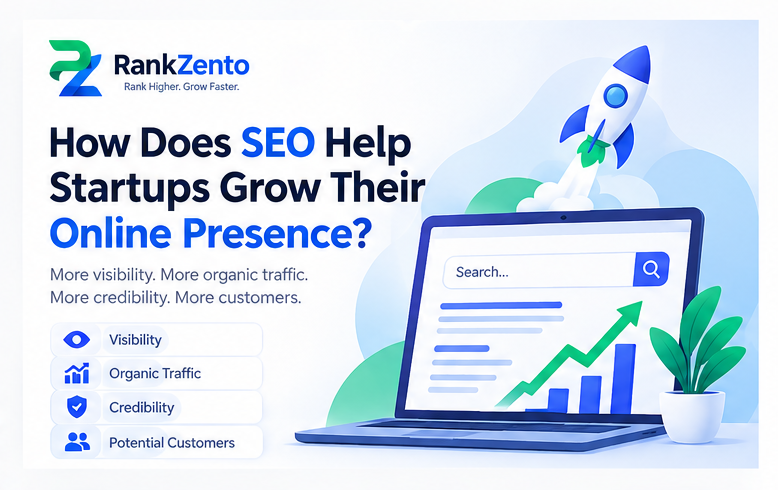
SEO helps startups become more visible to potential customers when customers are actively searching for their products or solutions. SEO can help startups build visibility, gain organic traffic, develop credibility, and create a consistent flow of potential customers.
SEO should not be viewed as a quick-fix traffic solution. There are many factors that impact the results of an SEO strategy. These include competition, the quality of a website, the usefulness and relevancy of website content, the authority of the website, the search demand, the correct implementation of the SEO on the website, and the overall consistency of the SEO strategy. Publishing just a few website pages will not be enough to lead to growth of the website. SEO requires a long-term commitment in order to satisfy the needs of customers with the website information.
For SEO for startups, the goal should not be about where they rank. It is about becoming visible to customers when they conduct a search for solutions to their problems, compare solutions, and look for specific products and services.
Why Is SEO Important for Startups?
Startups have challenges when trying to build their presence because they have no recognition, very little to no resources, and are less authoritative compared to established brands. Some common challenges include:
Limited Brand Recognition
New companies have difficulty getting customers to find them because customers don’t know about them. Established companies often have customers search for their company name, whereas startups have to build awareness.
SEO helps startups get discovered for searches that are pertinent to their products and services, as well as industry topics, even if customers are not aware of the brand name.
Competing With Established Businesses
Large companies tend to win the competitive search results game. This is because they have high-quality company websites, content published over a period of years, and many trusted references.
Startups do not always have to compete for broad keywords. They can opt for user-related problems, user-related queries, user-related niches, and user-related detailed searches based on their area of specialization and expertise.
A project management software start-up may not be able to rank for project management software, but may possibly rank for project management software for small creative teams.
Limited Marketing Budgets
Many startups need sustainable growth strategies. One of the most common growth strategies with an instant reward is using paid advertising, but traffic stops when spending stops.
While SEO does require an initial investment in strategy, content, technological changes, routine optimization, and slow building of authority, there is a possibility to create a long-standing source of organic visibility instead of paying for each individual visitor.
Difficulty Reaching the Right Audience
Not all website traffic is potential business. Most startups are looking for qualified traffic containing users who need their specific offering.
Startup search engine optimization helps solve the search intent of a query. Let’s look at some examples:
- Someone searching for “what is CRM software” is researching.
- Someone searching for “best CRM software for small businesses” is researching solutions.
Search intent is context differentiation that, once known, helps businesses structure their content in a way that is geared towards users at various stages of the buying process.
How Does SEO Help Startups Grow?
There is a common question that how SEO helps startups? The answer to this is SEO helps startups grow by increasing visibility, reaching more customers, and building brand trust without the need for heavy reliance on paid marketing. SEO most notably helps startups by driving consistent organic leads, thus generating leads, and helping a business grow sustainably in the long run. Below mentioned are some of the ways:
Increases Online Visibility
One of the SEO benefits for startups is that it guides search engines to understand the products and services and the accompanying content for a specific business. Search engines interpret fill in the gaps for a given search. A well-optimized site ranks relative searches, but rankings may be out of a business’s control due to competition and the quality of content and how a site is utilized.
Connects Startups to Customers with Search Intent
Search intent means customers have a strong interest in a particular solution. Customers are active and are likely to browse and compare various products and services. From a business perspective, search intent customers become more likely to make a purchase.
Creates Long-Lasting Organic Traffic
Rankings due to search engine optimization are ever-green. Once optimization is done and content is published, organic traffic is achieved without cost. Regular updates such as technical SEO and page testing is required.
Levels The Playing Field With The Big Guys
Smaller businesses do not always have to go against high competition. SEO for small businesses allows for very niche targeting. It is possible to target long-tail keywords to lower competition and bring in a more relevant target audience.
Establishes Trust And Brand Value
Publishing quality content increases Brand credibility, authority, and relevance. It really shows that the business is concerned about presenting value to customers.
Adds Qualified Leads
SEO strategy for startups guides customers the first step of the process, from Search to Trust to converting and growing the business. SEO is not just for ranking pages. SEO efforts are aligned to maximize customer leads and result in sustainable business growth.
What SEO Areas Should Startups Focus On?
Focusing on technical aspects of SEO like keyword research, technical SEO, and quality content builds backlinks with authority and improves a startup’s online visibility. Startups focus on sustainability and attracting the right traffic through user experience, local SEO, and data-driven techniques.
Keyword Research
Startups must research what their customers are searching for and use product, service, problem-based, informational, comparison, and commercial keywords. Understanding the needs of your customer is important, meaning you should not use keyword stuffing as your end goal.
Technical SEO
Having good technical SEO for new businesses helps search engines crawl and understand your website. Website speed, mobile usability, security, indexing, sitemaps, internal linking, and a clear site structure fall under this umbrella.
On-Page SEO
This type of SEO is focused at the page level. Examples include using relevant and clear titles and headings, optimizing images, having URLs with relevance, providing good content, and using relevant internal linking. Content must be written for the users first, rather than for search engines.
Content Strategy
If a startup wants to get visibility, then they need to write good content such as guides, how something works, comparisons, case studies, news, and industry content. Keyword stuffing should not be done. Quality content written once is much better than a large amount of mediocre written content.
Building Authority
A company’s authority can be built by gaining backlinks and partnerships. This can be done via PR and expert contributions. The main focus for startups should be to get mentioned naturally, and avoid spammy link building practices.
How Long Does SEO Take for a Startup?
Startup SEO results are unpredictable and take different amounts of time. There are many factors that affect the timeline. Some of those factors include:
- Website age
- Level of competition
- Industry
- Website health
- Content quality
- Authority of the website
- Investment
- Consistency of efforts
Some results may appear shortly, while other noticeable results may take many months. Startups should understand that SEO is a long term process and not look for immediate results.
SEO vs PPC for Startups: Which Is Better?
The differences between PPC and SEO marketing are many.
PPC
- Quick results
- Marketing that drives traffic immediately
- Testing and communicating corporate messages
SEO
- Long-term visibility
- Effective and sustainable organic growth
- Building search visibility and authority
PPC should really be used to drive initial traffic for most startups. The goal is to have the sustainability of SEO traffic, vital for a growing business.
Ready to Grow? Start Your Digital Marketing Journey With Us
Build a smart digital business strategy with Rank Zento, a trusted digital marketing agency that helps your business gain visibility, leads, conversions, and sustainable growth.
How SEO Works With Other Digital Marketing Channels?
SEO works best as part of integrated marketing strategies.
SEO and Content Marketing
Publishing useful content helps improve visibility and builds trust with potential customer base.
SEO and Social Media
Many social media platforms also help increase the reach and awareness of your content.
SEO and Web Design
A fast and mobile friendly website that also maintains an emphasis on conversion helps keep the website design contemporary.
SEO and Analytics
Analytics help startups gain insight into user behavior, relate that back to their business goals, and determine performance based on desired outcomes.
How Can Startups Prepare for AI Search?
AI-driven search experiences like Google AI Overviews, AI Mode, and others, have the potential to disrupt how users find information.
Startups must have a strong core:
- Good Information
- Unique Perspective
- Good Writing
- Qualified Authors
- Clear Website Organization
- Relying On One’s Own Experience
- Consistent Identity
There is no guaranteed “AI search hack.” To encourage users to access your content, you must create content that is valuable and trustworthy.
Common SEO Mistakes Startups Should Avoid
Startups should steer clear of the classic errors colleges use in SEO like skipping keyword research, publishing content that is of poor quality, oversight of technical SEO, and insensitivity to mobile users. Addressing these issues and measuring the performance of SEO on a continuous basis builds strong ranking, visibility, and sustained growth.
Targeting Only High-Volume Keywords
While it’s important to consider search volume, relevance and user intent are most important.
Publishing Generic Content
Publishing a lot of low-value content will not give you authority.
Expecting Immediate Results
SEO is a long game. You can’t give up after a few months.
Ignoring Technical SEO
Until a website is optimized, you can’t expect growth.
Focusing Only on Google Rankings
It’s more important to achieve business goals than to rank high.
Forgetting Conversions
Increased traffic that doesn’t help your business goals is meaningless.
Buying Low-Quality Links
Links that aren’t reputable will hurt your website.
How Should a Startup Build Its SEO Strategy?
A practical process should include the following:
- Determine target customer
- Lookup the search demand and the intent of the customer
- Create a technically sound website
- Optimize priority product and service pages
- Develop useful content that is customer centric
- Build pertinent authority
- Track traffic, leads and conversions
- Optimize based on real data
A practical process should include all of the above.
How Do You Measure SEO Success for a Startup?
When measuring the success of an SEO strategy, startups should consider business metrics such as:
- Organic impressions
- Organic clicks
- Traffic to the website that’s relevant
- Keyword visibility
- Lead generation
- Conversion rate
- Sales
- Cost per acquisition
- Growth of branded searches
- Engagement on important pages
Those metrics vary according to what the startup aims to achieve and how they operate.
Conclusion
SEO helps startups build visibility and reach users who are looking for solutions. Having SEO that ranks is one thing, but the suite of strategies that surround SEO are just as important. The best SEO strategies for startups rely on a website that’s designed to not only rank, but convert; content that is optimized for search intent; and information that is accurate, authoritative, and relevant. Startup SEO that combines the efforts of content marketing, social media, ads, analytics, and web design can help provide visibility to startups and help earn their users’ trust.
Frequently Asked Questions
Is SEO important for startups?
SEO is essential for startups when it comes to improving visibility and gaining customers who are searching for services or solutions.
What is the estimated time for SEO to start working for startups?
It is difficult to predict how long it takes for SEO to work since there are many factors that impact page rankings like competition, website quality and authority, and how often you update your website.
What should a startup budget for SEO?
It depends on your goals, competition, industry, and the service offerings. There is no amount for each startup that works for everyone.
Do startups have a chance against big companies in the SEO market?
Absolutely. They can create tailored content for specific customer problems and topics.
Should a startup be more concerned about SEO or PPC?
SEO and PPC can aid in a startup’s success, but understanding these should be in the context of long vs. short term goals.
Can SEO help startups generate leads?
When combined with strong website pages that have call to action prominently enough to be converted, SEO can drive leads.
Can SEO help startups show up in AI search?
SEO can help in the modern search landscape, like continuously creating good content and keeping it trustworthy.